%20(7)_edited_.jpg)
%2Crhi%2Cpach%20(3)_JPG.jpg)
_JPG.jpg)
_JPG.jpg)
_JPG.jpg)


Welcome at
AP4D
OUR BACKGROUND
The project was founded and is managed by MJ Grunert, active wildlife protection ranger and Namibian wildlife conservationist, who is running a security training academy in his private nature reserve in the Kunene region / Northwest Namibia.
A conservationist through and through, MJ founded the AP4D project to use his expertise, facilities and experiences to combine the needs of nature and wildlife conservation with the necessary socio-economic development of people in areas affected by human-wildlife conflicts and poaching.
Through his contacts with international non-profit organizations, associations and sponsors abroad, he has the opportunity to support organisations in the development and training of wildlife protection teams.
BENEFICIARIES:
NAMPOL, MET, NDF
AP4D supports the wildlife protection ("anti poaching") efforts of the Namibian Police Force (NAMPOL), Namibian Defense Force (NDF) and the Ministry of Environment & Tourism (MET). These are the spearhead of wildlife conservation and anti-poaching efforts in Namibia and therefore deserve support from international wildlife conservation sponsors.
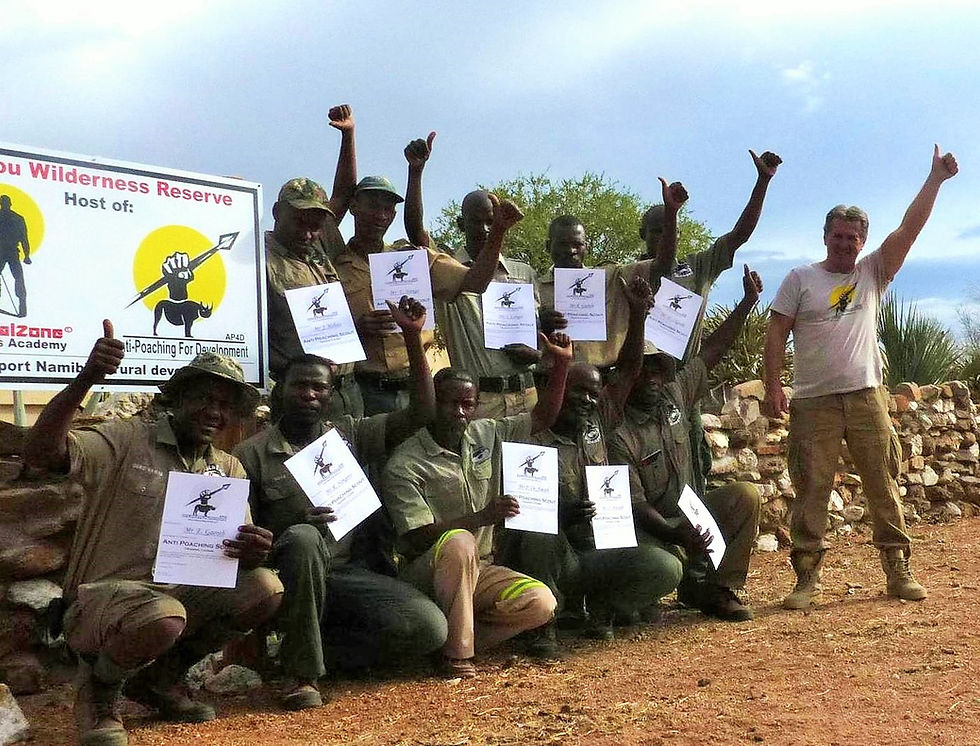
Special Field Police Officers from Kunene Region as well as from the Ozozonjupa Region were repeatedly used the training courses of the AP4D to further improve their qualifications.
BENEFICIARIES:
Rural conservancies
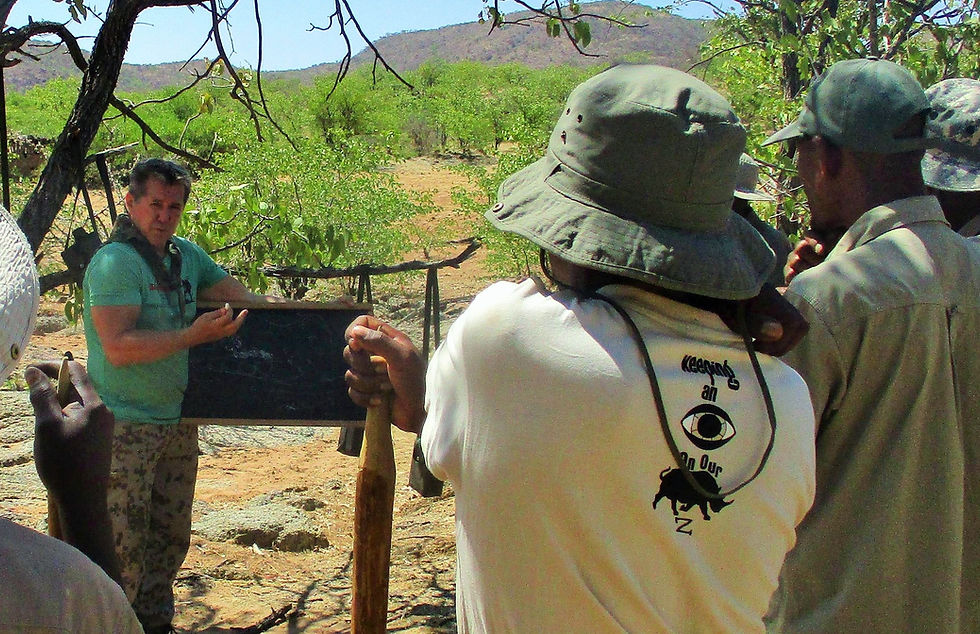
AP4D supports rural development and nature conservation by assisting in the training and running of wildlife protection ranger teams. This is done especially by offering high standard training courses for WP personnel. The offer is aimed in particular:
a) at members of rural communities which are facing severe poaching AND human-wildlife conflicts
b) at members of rural communities who share their land with protected and endangered wild animals, especially elephant, rhino and lion.
LAW AND ORDER
At first glance and with people who are not properly informed about their true work and task, anti-poaching officers are often perceived as para military units or even "mercenaries.”
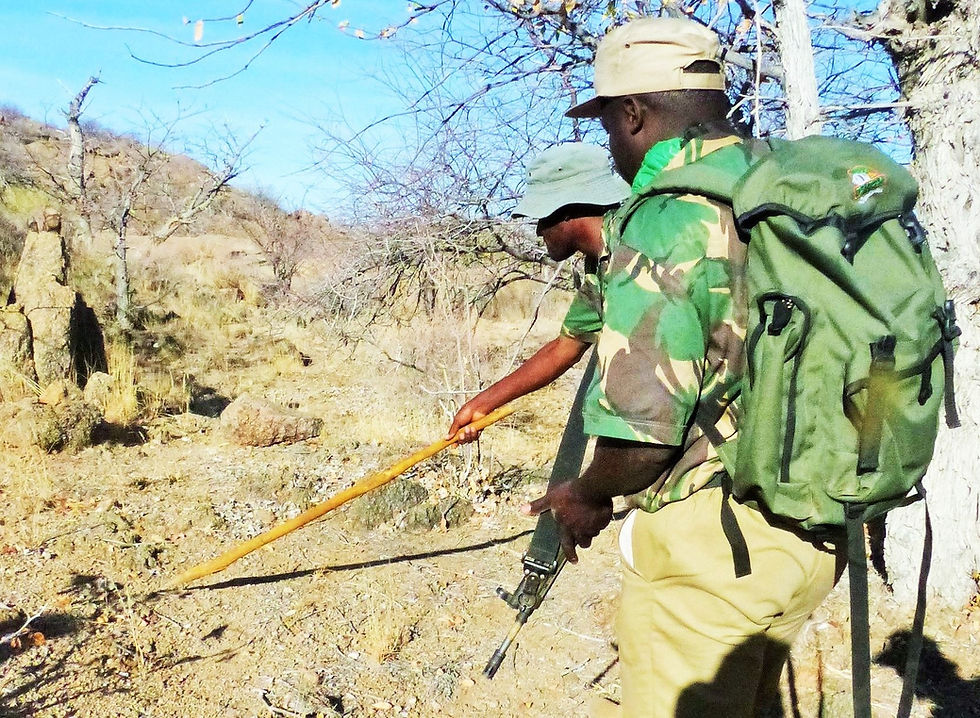
In fact, they are just law enforcement officers in the wild who often wear camouflage uniforms to avoid being seen. The weapons are only intended for self-defense, against armed offenders as a conflict situation out in the wilderness can quickly escalate.
In order to get rid of the sometimes negative image, we nowadays prefer to use the more defensive term "wildlife protection" for this type of security work. It is purely about “protecting law and order” against perpetrators who commit crimes against nature and to bring them to justice. - And nothing more.
WORKING IN DANGEROUS ENVIRONMENTS
State, communal or private wildlife protection rangers work in an environment in which they are exposed to a variety of dangers. As their specific health and safety training, WP rangers receive training not only in first aid, wilderness survival, etc., but also in the defense against attacks by violent criminals. Unarmed and armed self-defense training, including firearms, is essential to protect themselves from the dangers that come with their job. - Please understand the photos showing such training as an absolutely necessary health & safety training for our rangers.
PHYSICAL PROTECTION OF SPECIES AND NATURE
Not only biologists and social workers are in demand for nature conservation. Wildlife protection means protecting biotopes and wildlife using law enforcement methods. It means physically detering, pursuing and arresting of wildlife criminals. - Luckily, nowadays, major nature conservation organizations are increasingly advocating active wildlife protection ("anti poaching"). What previously caused “discomfort” among many conservationists is now an accepted means of combating the destruction of nature and wildlife populations.







Development of State and Communal Wildlife Protection Teams
for Nature Conservation, Law Enforcement and Development